The East-West Bag: Why Everything Went Horizontal
Quick Answer: An East-West bag is any bag wider than it is tall — a landscape orientation rather than portrait. The shape flatters because horizontal lines sit sleekly along the hip instead of interrupting the waist, and it reads modern instantly. Buy one in black or chocolate leather, and do the phone test before you commit: the elegant ones can be surprisingly snug.
Look at any street style gallery from the last two seasons. Every bag has been stretched sideways.
Baguettes got longer. Totes got flatter. Crossbodies stopped being pouches and became slim horizontal slabs.
There’s a name for it, and there’s a reason it stuck.

What Does East-West Actually Mean in Bags?
Width greater than height. That’s the whole definition.
The term borrows from photography and map orientation — a “North-South” bag is portrait, taller than wide (think a classic bucket bag or a tall tote). An East-West bag is landscape: elongated baguettes, low-slung shoulder bags, stretched crossbodies, flat document-style totes.
Rough ratio to look for: anything from 1.4:1 to about 2.5:1 width-to-height reads clearly East-West. Beyond that you’re into “clutch that looks like a ruler” territory, which is a real category but a braver one.
The proportion is the entire trend. A plain black bag in landscape orientation reads current; the identical leather in portrait reads 2019.
Why Does the East-West Shape Flatter?
Because of where it lands and what line it draws.
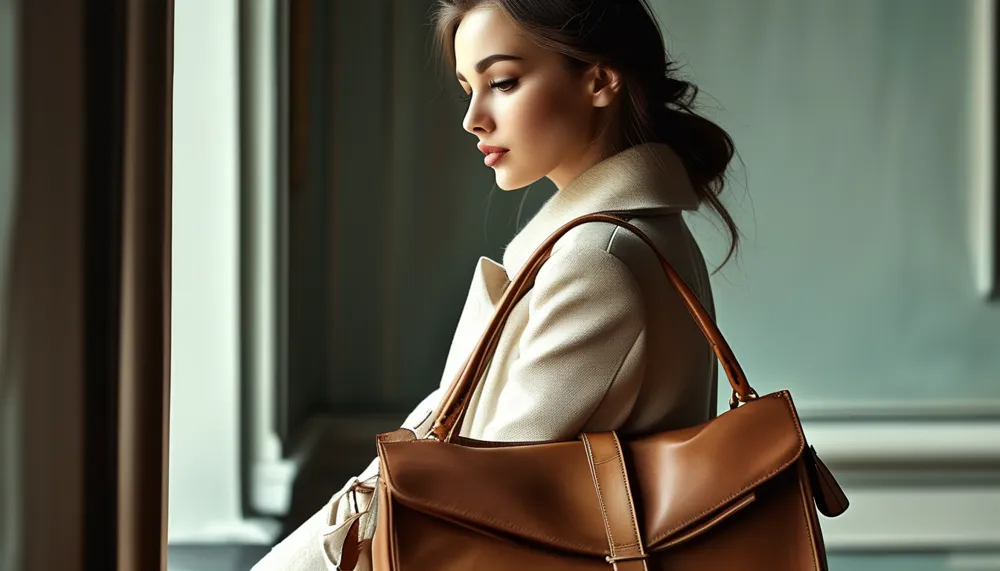
A tall bag hangs vertically at your side, and its bottom edge cuts across the widest point of the hip — a hard horizontal interruption right where you’d least choose one. An East-West bag sits along the body instead of against it, its long edge running parallel to the hip line.
Under the arm, the same logic applies: the flat profile tucks against the ribs instead of creating a boxy lump at the waist. Nothing bulks out at the midsection.
It’s genuinely rare for a trend and a flattering angle to arrive together. Usually you pick one.

Is an East-West Bag Actually Practical?
More than it looks, with one caveat.
What fits well: phone, cardholder, keys, lipstick, sunglasses in a slim case, a folded mask or tissues. The horizontal layout means everything sits in a single visible row — no archaeological digging.
What doesn’t: a full-size water bottle, a paperback, an umbrella, a laptop unless you’ve bought a specifically oversized tote version.
The shallow depth is actually a feature. Deep bags become handbag landfills; a flat bag physically cannot accumulate six months of receipts. Shoulder-carry versions free your hands entirely, which is what separates a chic bag from a chic inconvenience.
Myth vs Fact: The East-West Bag
Myth: It’s a tiny bag that holds nothing. Fact: Volume depends on width and depth, not orientation. A 14-inch East-West tote holds more than a 9-inch bucket bag. The small ones are small; the shape isn’t.
Myth: It only works with dressy outfits. Fact: Long-strap versions swing entirely casual with denim and a tee. The under-arm carry is the dressy one.
Myth: It’s a one-season trend that’ll date fast. Fact: The baguette is thirty years old and on its third revival. Horizontal bags have cycled in since the 1960s — this is a returning proportion, not a novelty.
Myth: You need a structured leather one for it to look good. Fact: Soft, slouchy East-West bags read effortless rather than formal. The structure choice is a style decision, not a requirement.
Myth: Tall people can’t wear them. Fact: Scale up the width. A longer bag on a longer frame keeps the ratio right — the proportion is relative to you, not absolute.
How Do You Style an East-West Bag?
Two carries, two moods.
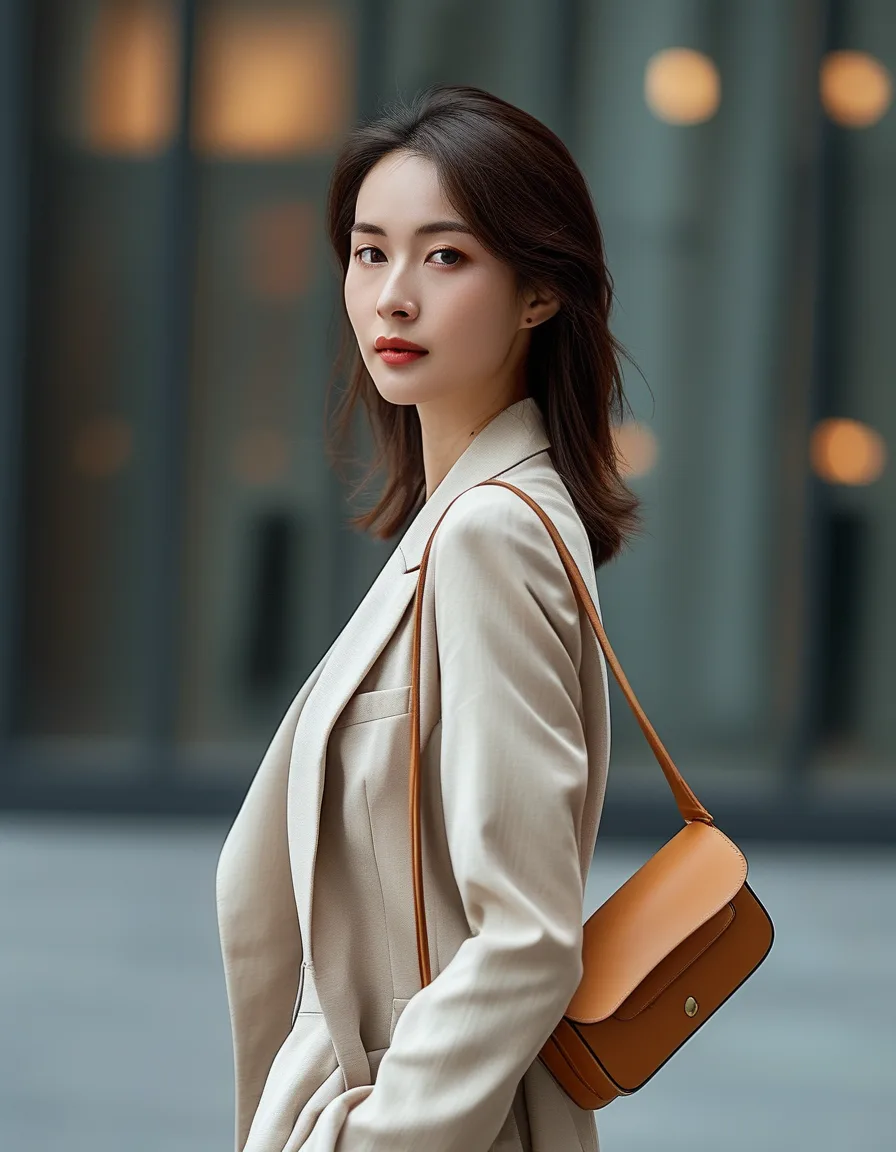
Under the arm, short strap. Suits tailoring, minimalist looks, anything with a clean line — a blazer and straight-leg trouser, a slip dress, a shirt-and-wide-leg combination. This is the editorial carry.
Long strap, crossbody or low shoulder. Immediately casual. Denim, a knit, sneakers. The bag swings at hip level and does the geometry work without asking for attention.
One styling rule: the bag’s clean line rewards clean outfits. A heavily layered, texture-rich look competes with the horizontal geometry rather than showcasing it. Let the bag be the shape moment.
How Do You Choose the Right One?
Four checks before you buy:
- The phone test. Bring your actual phone to the store, or measure before ordering online. Elegant proportions and modern phone dimensions are frequently at war.
- Color for longevity. Black and chocolate leather outlast the trend cycle completely. Suede, burgundy, and butter yellow add fashion mileage but shorter shelf life — buy those second.
- Strap options. A bag with both a short handle and a detachable long strap does two jobs, which effectively halves the cost per wear.
- Base structure. A soft bottom sags into a taco shape when loaded; a reinforced base holds the horizontal line. If you’re buying for the geometry, buy the structure.
Buy the proportion, and it’ll carry you well past the season that made it fashionable.
Frequently Asked Questions
What’s the difference between an East-West bag and a baguette?
A baguette is one specific East-West style — a small, curved shoulder bag with a short strap, popularized by Fendi in 1997. East-West is the broader category describing any width-over-height bag, including totes, crossbodies, and clutches.
Are East-West bags good for petite frames?
Yes, with scale attention. Choose one no wider than your torso — roughly 10 to 12 inches for most petite frames. An oversized horizontal bag on a small frame reads as carrying luggage, while a correctly-scaled one visually widens and balances the silhouette.
Will the East-West bag trend last?
The proportion has cycled through fashion repeatedly since the 1960s and returned strongly in 2023–2024. Trend-forecast anxiety aside, a black or brown leather version is a shape you’ll wear regardless of what’s current — which is exactly why the classic colors are the smart buy.
Can an East-West bag work as a work bag?
The oversized tote versions can, if they take a 13-inch laptop and you check the depth. Standard-size East-West bags won’t. Many people carry both — a large horizontal tote for commuting and a small one for everything else.
TL;DR:
- East-West means width greater than height — landscape, not portrait. Ratios of 1.4:1 to 2.5:1 read clearly as the trend.
- It flatters because the long edge runs parallel to the hip instead of cutting across it.
- Holds phone, cards, keys, lipstick in a single visible row; won’t take a water bottle or a book.
- Under-arm carry for tailored looks, long strap for casual denim days.
- Buy black or chocolate leather, check the strap options and base structure — and always do the phone test.
Keep Reading
This article is for general styling and informational purposes only. Trends, sizing, availability and pricing may vary by brand and season.