Why a Bag That Sits Perfectly Balanced Empty on a Shoulder Can Tip and Slide Once It's Actually Loaded
A bag that hangs perfectly straight and balanced on the shoulder while completely empty in a store can tip, twist, and slide once it’s actually loaded with a wallet, phone, keys, and everything else carried daily, and that shift isn’t the bag being poorly made — it’s that an empty bag and a loaded one are being balanced around two different centers of gravity entirely.

Why an Empty Bag’s Balance Reflects Only Its Own Construction
The baseline: an-empty-bags-balance-on-the-shoulder-reflects-only-its-own-construction-and-strap-placement-since-theres-no-additional-weight-yet-to-shift-that-balance-point-anywhere (an empty bag’s balance on the shoulder reflecting only its own construction and strap placement, since there’s genuinely no additional weight yet present inside it to shift that balance point anywhere else on the body, per the handbag-styles-guide logic — an-empty-bags-balance-on-the-shoulder-reflecting-only-its-own-construction-and-strap-placement-since-theres-no-additional-weight-yet-present-inside-it-to-shift-that-balance-point-anywhere), and the reframe (an empty balance check confirming the bag’s own geometry, not its behavior once used)).

Why Loaded Contents Shift the Center of Gravity Toward Used Pockets
The shift: once-a-bag-is-loaded-with-typical-daily-contents-the-center-of-gravity-shifts-toward-whichever-pockets-actually-hold-the-heaviest-items-often-pulling-the-bag-off-its-original-balance-point (once a bag is actually loaded with typical daily contents, the overall center of gravity shifts toward whichever specific pockets end up holding the heaviest items, often pulling the whole bag noticeably off the original balance point it held while empty, per the how-many-bags-do-you-need-guide logic — once-a-bag-is-loaded-with-typical-daily-contents-the-overall-center-of-gravity-shifts-toward-whichever-specific-pockets-end-up-holding-the-heaviest-items-often-pulling-the-whole-bag-off-its-original-balance-point), and the frame (loading, not construction quality, being what most often causes a bag to twist or slide)).
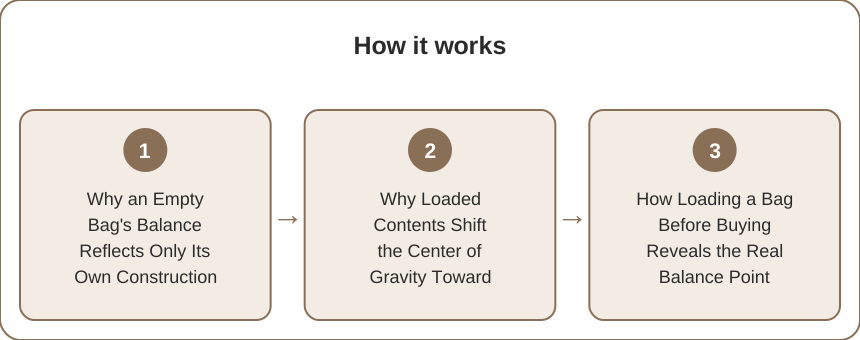
How Loading a Bag Before Buying Reveals the Real Balance Point
The test: load-a-bag-with-a-phone-wallet-keys-and-a-few-other-typical-daily-items-while-still-in-the-store-and-check-its-balance-on-the-shoulder-rather-than-judging-it-empty (loading a bag with a phone, wallet, keys, and a few other typical daily items while still in the store, and checking its balance on the shoulder in that loaded state, rather than judging the bag only while it hangs empty on a shelf, per the bag-organization-care logic — loading-a-bag-with-a-phone-wallet-keys-and-a-few-other-typical-daily-items-while-still-in-the-store-and-checking-its-balance-on-the-shoulder-in-that-loaded-state-rather-than-judging-it-empty), and the frame (testing the condition a bag will actually be carried in, not the condition a shelf displays it in).
An empty bag’s balance on the shoulder reflects only its own construction and strap placement, since there’s no weight yet to shift that point anywhere, while loading a bag with typical daily contents shifts the center of gravity toward whichever pockets hold the heaviest items, often pulling it off that original balance. Loading a bag with a phone, wallet, and keys while still in the store and checking its balance in that loaded state reveals the real balance point before buying, instead of judging a bag only in the empty state a shelf displays it in.
Keep Reading
This article is for general styling and informational purposes only. Trends, sizing, availability and pricing may vary by brand and season.